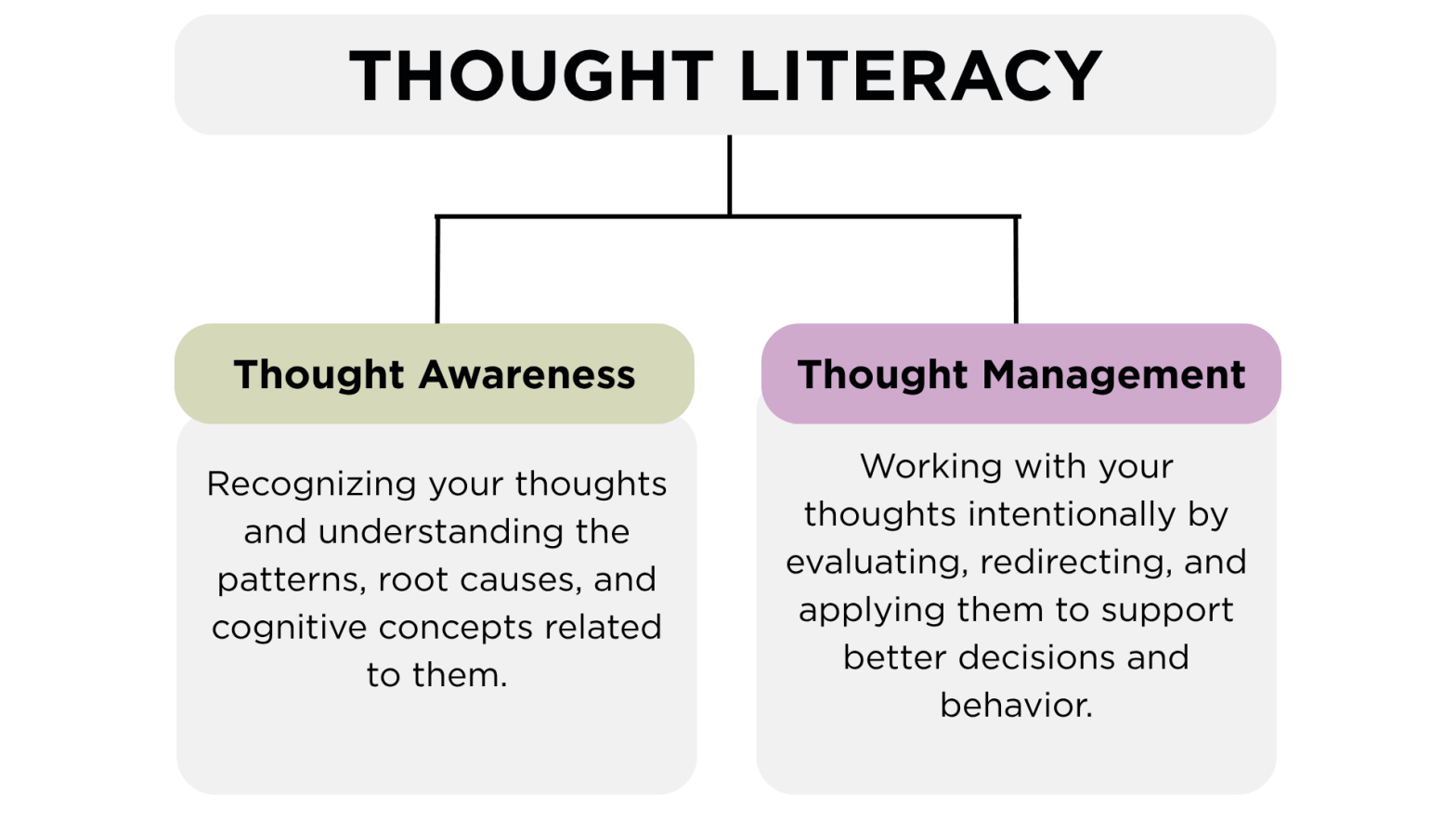

Thought literacy is the awareness and management of thoughts. To make it intuitive, the two core elements are directly in the definition:
Together, they help you understand and work with your thoughts so you can respond intentionally instead of reacting automatically.

Thought Awareness

In the thought literacy framework, thought awareness is recognizing your thoughts and understanding the patterns, root causes, and cognitive concepts related to them.
Awareness can happen either during reflection or as thoughts occur and also includes understanding how your environment influences your thinking and recognizing the beliefs or assumptions that have shaped your behavior. Building awareness can be messy, as insights may come unexpectedly and from unexpected places.
Learn more about thought awareness ↗
Thought Management

In thought literacy, thought management is defined as intentionally working with your thoughts by directing, evaluating, and processing them, identifying and filling gaps in knowledge, and choosing how to respond and engage with the environments that influence your thinking.
Over time, this process builds a habit of examining your thinking instead of accepting it at face value. As gaps in knowledge are filled and recurring patterns become easier to recognize, decision making becomes more informed and deliberate.
Learn more about thought management ↗
Thought Literacy is an independent educational initiative. Please support its growth by buying a book or buying me a coffee.
Thoughts?