

Thoughts are how we communicate to ourselves. They help us interpret the world and our place in it. They’re also the root of how we learn.
Having limited access to how your mind works, and how your thought patterns are affecting you, can result in reactions to negative thoughts that escalate anxiety and negative feelings. It can also make you more susceptible to manipulation and unhealthy messages in your environment.
Thought literacy is the awareness and management of thoughts. It’s a fundamental life skillset and the foundation for self-awareness, mental wellbeing, and fulfillment. And it’s been structured into a framework with methods and taxonomy to make working with thoughts accessible no matter where you’re starting.
Thought Awareness and Thought Management

The two pillars of thought literacy align with the two most commonly accepted pillars of intrapersonal emotional intelligence, awareness and management.
- Thought awareness is recognizing your thoughts and understanding the patterns, root causes, and cognitive concepts related to them.
- Thought management is intentionally working with your thoughts and choosing how to respond and engage with the environments that influence your thinking.
Together they help you understand your mind and use your awareness to manage your thoughts, emotions, and behavior.
The 5 Key Concepts
Both thought awareness and management include 5 key areas that help you learn and work with your thoughts.
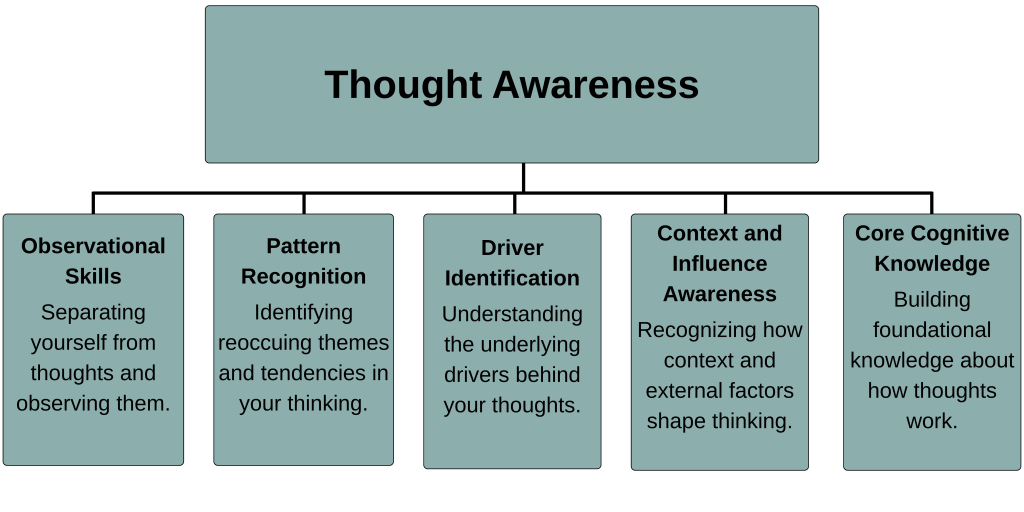
Thought Awareness Concepts
- Observational skills involves noticing thoughts without immediately reacting to or identifying with them.
- Pattern recognition builds on observational skills by identifying recurring thought patterns and the beliefs that influence them.
- Driver identification supports pattern recognition by identifying the underlying concerns that fuel recurring thought patterns.
- Context and influence awareness focuses on recognizing how your environment, relationships, culture, and media shape your thinking.
- Core cognitive knowledge involves understanding foundational concepts such as the thought-emotion connection, cognitive distortions, and related cognitive principles.
See examples and learn more here.

Thought Management Concepts
- Intentional direction involves deciding how to respond to a thought rather than automatically following it.
- Thought evaluation and restructuring is identifying unhelpful or maladaptive thought patterns, evaluating assumptions, checking facts, and prioritizing helpful thoughts.
- Acceptance and responsibility involves separating situations based on your level of control and focusing on what you can influence or need to accept.
- Thought processing is working through persistent thoughts and closing awareness gaps to respond intentionally.
- Environmental management involves intentionally choosing how to engage with external influences that are impacting your thoughts.
See examples and learn more here.
Methods and Techniques
Within the thought literacy framework there are methods to help you develop the skill and continue to work with your thoughts.
- The ICE Method for thought restructuring, is a modern and advanced variation of the three Cs framework in CBT. It includes pattern and environmental awareness as well as internal motivation to expedite thought change.
- The Five Drivers of Thought Awareness, is a framework that aligns with the “driver identification” concept within thought awareness. Helping you build thought awareness by viewing thoughts through five common drivers.
- Thought Reverse Engineering, an entry point into working with thoughts. This helps you identify unhelpful thoughts by tracing them from the emotion they influenced.
- Thought Tells for thought pattern awareness, are a list of five common tells a thought is unhelpful or distorted so you can learn to identify them in your mindset.
How to Get Started
An easy entry point to thought literacy is Thought Reverse Engineering. A technique you can start with now with this article here.
You can also read more articles, check out thought literacy books, or core cognitive concepts here.
Thought Literacy is an independent educational initiative. Please support its growth by buying a book or buying me a coffee.
Thoughts?